Selling a house with mold in Iowa

You smell it before you see it. That damp, earthy note that hangs in a closed-up room, the one that gets a shade stronger every time it rains. By the time a dark bloom shows up in the back of the closet or behind the water heater, the smell has already told the story. And here's the part nobody warns you about: the patch you can see is almost never the whole problem. What matters is what's quietly spreading behind the drywall, under the trim, along the sill plate. Which is why selling a house with mold turns into a disclosure question in a hurry, not just a cleaning one.
Yes, you can sell a house with mold in Iowa. You have two honest routes: pay to remediate it and sell on the open market, or disclose it and sell as-is to a cash buyer who prices the repair into the offer. What you cannot do is paint over it and stay quiet. Iowa asks sellers to disclose known problems, and mold is squarely on that list.
The real decision is whether to spend money fixing mold before you sell, or price it in and hand the problem to someone who does remediation for a living. The rest of this comes down to how bad it actually is and how fast you want to be done.
How bad is the mold, really?
Before you panic or spend a dime, figure out the size of the thing. Mold is a moisture problem wearing a costume. It grows where water sits: a slow roof leak, a sweating pipe, a basement that takes on water every spring, a bathroom fan that vents into the attic instead of outside. The colored spots on the surface are the symptom. The water is the disease.
A useful rule of thumb from the pros: if the affected area is smaller than roughly ten square feet, a careful DIY cleanup is often reasonable. Bigger than that, or hiding inside walls and HVAC, and you want a professional who won't spread spores all over the house trying to help. And that dreaded phrase, "black mold"? It gets treated like a horror movie, but the color tells you very little. Plenty of ordinary molds are dark, and the fix is almost always the same: kill the moisture, remove what's contaminated, dry it out.
I've walked into "disaster" basements that were a weekend fix, and I've seen a small stain in a closet that turned out to be a rotted wall cavity. You don't know which one you have until someone looks behind the surface. Guessing is the expensive part.
The takeaway: get eyes on the moisture source, not just the stain. Once you know whether it's a surface nuisance or a structural mess, every other decision on this page gets easier.

What you must disclose in Iowa
Here's the non-negotiable part. Iowa is a disclosure state. Under Iowa Code Chapter 558A, most residential sellers have to give buyers a written property condition disclosure statement, and it asks directly about water damage and known problems in the structure. If you know about mold, or you know the basement floods, that goes on the form. Full stop.
The trap people fall into is thinking "as-is" is a magic phrase that erases this. It isn't. Selling as-is means you're not agreeing to make repairs. It does not mean you get to hide what you already know. Disclose the mold, disclose the water history, and hand over any reports you have. A buyer who knows what they're getting can still buy happily. A buyer who finds out later, after closing, is a buyer with a lawyer.
Disclosure feels scary because it sounds like confessing. It's the opposite. The written record that you told them is exactly what protects you after the sale closes.
If you want the wider picture on selling a house that isn't showroom-ready, we wrote a plain-English guide to selling a house as-is in Iowa that covers what "as-is" does and doesn't do. The short version: honesty on the front end is cheaper than a claim on the back end. The federal EPA guidance on mold is also a solid, jargon-free reference to keep handy.
Remediate it or sell as-is?
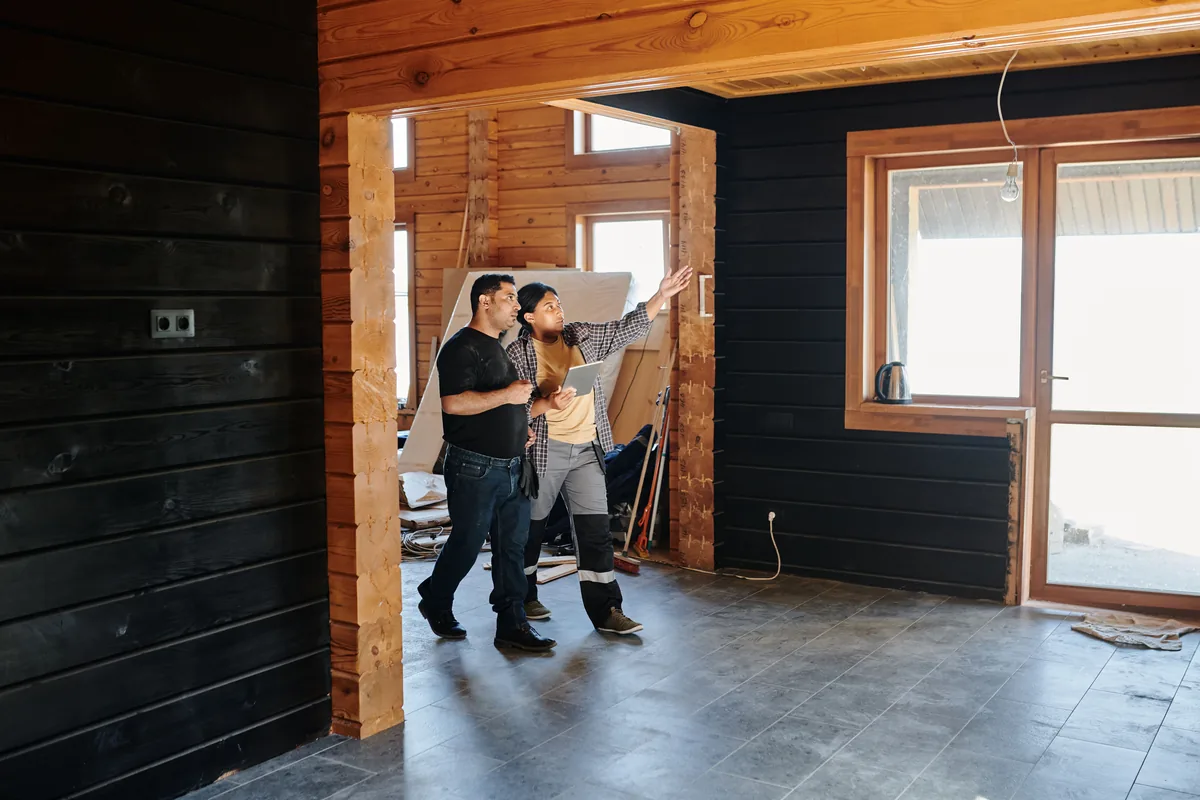
This is the fork in the road. Fixing mold before you sell can widen your buyer pool and lift the price, especially if the problem is small and the rest of the house shows well. But remediation isn't free, and it isn't instant. A tiny surface patch might be a few hundred dollars of DIY. A professional job on a real problem area commonly runs somewhere from $1,500 to $6,000, and once you're chasing the source, a new roof section, a sump system, replaced framing, the number can keep climbing. You're also managing contractors, timelines, and the odds that they open a wall and find more.
Selling as-is trades the top-dollar price for speed and certainty. You don't front the repair money, you don't schedule anyone, and you don't gamble on what's behind the drywall. Here's the honest tradeoff, side by side:
| Remediate, then list | Sell as-is for cash | |
|---|---|---|
| Upfront cost | You pay for cleanup and the source repair first | $0 out of pocket |
| Timeline | Weeks to months (contractors, listing, showings) | Often a week or two |
| Who does the work | You coordinate it | The buyer handles it after closing |
| Risk of surprises | Yours until it's sold | Priced in and off your plate |
| Best when | Small problem, strong house, time to spare | Bigger problem, tight timeline, want it done |
Neither answer is "right." It depends on the size of the mold, the shape of the rest of the house, and how much of your life you want to spend on it. If the house needs real work, our take on selling a home in rough shape, a buyer that takes any condition, walks through how that math usually shakes out.
How mold affects value and financing
Two different forces knock money off a mold house, and most sellers only think about the first one. The obvious hit is buyer psychology: mold reads as "expensive and gross," so offers come in low or not at all. Fair enough. But the quieter, bigger problem is financing.
When a buyer needs a mortgage, the lender sends an appraiser, and visible mold or active moisture is exactly the kind of thing that gets flagged. FHA, VA, and plenty of conventional lenders can require the mold to be remediated before they'll release the money. So the buyer who loved your house can't actually close on it until someone fixes the problem, and now you're back to paying for remediation anyway, on a deal that might still collapse at the last minute. The Consumer Financial Protection Bureau has good background on how appraisals and loan conditions work if you want the mechanics.
The mold doesn't kill most financed deals. The appraisal does. That's the part sellers never see coming, and it's the single biggest reason a mold house sits.
This is where cash changes the game. A cash buyer isn't waiting on a lender's blessing, so there's no appraisal condition to fail and no financing to fall through. The offer already accounts for the repair, which means the number is honest about the mold instead of pretending it away. That's the whole reason as-is exists.

Who buys houses with mold
Cash buyers and investors buy houses with mold, on purpose, all the time. It's not charity, and it's not a lowball scheme either. Someone who does this for a living has a remediation crew, knows what the fix actually costs, and can price the house accordingly. Where a retail buyer sees a dealbreaker, an experienced buyer sees a line item.
How does a fair as-is offer get built? It's not a number pulled from the air. It starts with what the house is worth fixed up (the after-repair value), then subtracts the repairs, including the mold and its source, the carrying and closing costs, and a reasonable margin for the risk of opening those walls. I'll walk you through that math out loud instead of hiding it, because a number you understand is a number you can trust. That's the whole idea behind how I work with Iowa homeowners, one-on-one, no national call center reading from a script.
We buy across the state: Des Moines, Ames, Ankeny, all of Polk County, and the smaller towns in between. You can see the areas where we buy houses and, if your place has a mold story, we've almost certainly seen a version of it before.
Nobody's grading your housekeeping. The furnace that quit, the spring the basement took on water, the smell in the back bedroom: that's just information I use to make a fair offer, not a reason to judge.
The bottom line
Selling a house with mold in Iowa comes down to three moves: find out how bad it really is, disclose what you know, and then decide whether to fix it or price it in. Remediating first can pay off on a small problem in a strong house. When the mold is real, the timeline is tight, or you'd rather not gamble on a financed buyer clearing appraisal, selling as-is for cash is usually the calmer road. If your Iowa house has a mold problem you'd rather hand off than fight, tell me about it and I'll give you a fair, no-obligation number, cleanup included.
Selling a house with mold: FAQ
Do you have to disclose mold when selling a house in Iowa?
Yes. Iowa's residential seller disclosure law requires you to report known conditions that affect the property, and known mold or a history of water problems falls under that. Selling as-is does not erase the duty to disclose what you already know.
Can you sell a house with black mold?
Yes. There is no law against selling a house that has mold, black or otherwise. You disclose it, and you either remediate it first or sell as-is to a buyer who prices the cleanup in. Most black mold problems are a moisture problem underneath, so the real fix is stopping the water.
How much does mold remediation cost?
A small surface patch can be a few hundred dollars of DIY cleanup. Professional remediation of a larger area commonly runs from around $1,500 to $6,000, and jobs involving the source (a leaking roof, a failed sump, rotted framing) can climb well past that once you fix what caused the mold in the first place.
Will mold fail a home appraisal or inspection?
It can. Visible mold and active moisture are the kind of thing an appraiser or inspector flags, and FHA, VA, and many conventional lenders can require repairs before they will fund the loan. That is why financed buyers often walk from a mold house, and cash buyers do not have that hurdle.
Can I sell a house with mold as-is for cash?
Yes, and it is often the simplest route. A cash buyer inspects the house, prices the remediation into the offer, and closes without lender repair conditions. You skip the cleanup, the contractor scheduling, and the risk of a financed deal falling apart at appraisal.