Selling a house with a broken sewer line in Iowa
A sewer line fails in the least convenient way possible: from the inside out, underground, all at once. There is no warning light, no slow drip you can mop up. One flush backs up into the tub, then the floor drain in the basement burps, and suddenly you are standing in a room you do not want to describe, holding a plunger that is not going to help. Selling a house with a broken sewer line means selling around the one thing every buyer is most afraid of, a problem they cannot see, cannot smell until it is bad, and cannot easily price. It runs from your house to the street, it is buried four to eight feet down, and it just quit.
Here is the honest version. A broken sewer line is a real problem, but it is a solvable one, and you have more moving room than the panic in your gut suggests. The pipe that failed is almost always the sewer lateral, the line you own that carries waste from the house out to the city main or your septic tank. It can crack, collapse, belly (sag so water pools and clogs), or fill with tree roots. A plumber's camera scope tells you which. From there you have three real moves: scope and repair it, list it as-is on the MLS, or sell it as-is to a cash buyer who deals with the pipe themselves.
A buyer who hears the word "sewer" pictures the worst version of it, raw sewage in the basement on move-in day, and prices your house for that picture whether or not it is fair. Your job is not to hide the pipe. It is to know exactly what is wrong with it, so the story stays yours instead of the buyer's imagination.
What a broken sewer line actually is
Strip away the dread and a sewer problem is mechanical. The pipe carrying waste out of your house has stopped doing its one job, and there are only a handful of reasons why. Knowing which one you have changes the whole conversation.
The usual suspects on an older Iowa house:
- Tree roots. Roots chase moisture and squeeze into the smallest joint, then fan out into a mat that snags everything. On old clay or cast-iron laterals, this is the number one cause of a slow, recurring backup.
- A crack or a full collapse. Ground shifts, pipes age, and a hairline crack becomes a break. A collapse means a section has caved in and the line no longer carries flow at all.
- A belly. The pipe sags in the middle so waste and water pool there instead of running downhill. Solids settle, and you get clogs that keep coming back no matter how many times it is snaked.
The only honest way to know which of these you are dealing with is a camera scope. A plumber feeds a small camera down the line and you watch, in real time, the root mass or the crack or the standing water in the belly. That video is the single most useful thing you can own in this whole situation, because it turns "something is wrong with the sewer" into a specific, named, fixable defect.
(I have watched sellers relax the moment the scope finds roots at one joint instead of a collapsed run under the driveway. Same scary phone call, wildly different repair. You cannot tell the difference from the smell.)
A backup is a symptom. The scope is the diagnosis. Selling on a symptom lets the buyer imagine the worst; selling on a diagnosis keeps the number honest.
One thing to rule out early: this is a sewer line problem, not a septic system problem, and the two are different animals with different buyers and different fixes. If your house runs on a septic tank and field instead of a city sewer, read this one instead: selling a house with a failed septic system in Iowa.
Whose pipe is it? Almost always yours
Here is the part that surprises people, and not in a good way. When the sewer backs up, a lot of sellers assume it is the city's pipe and the city's bill. Usually it is not.
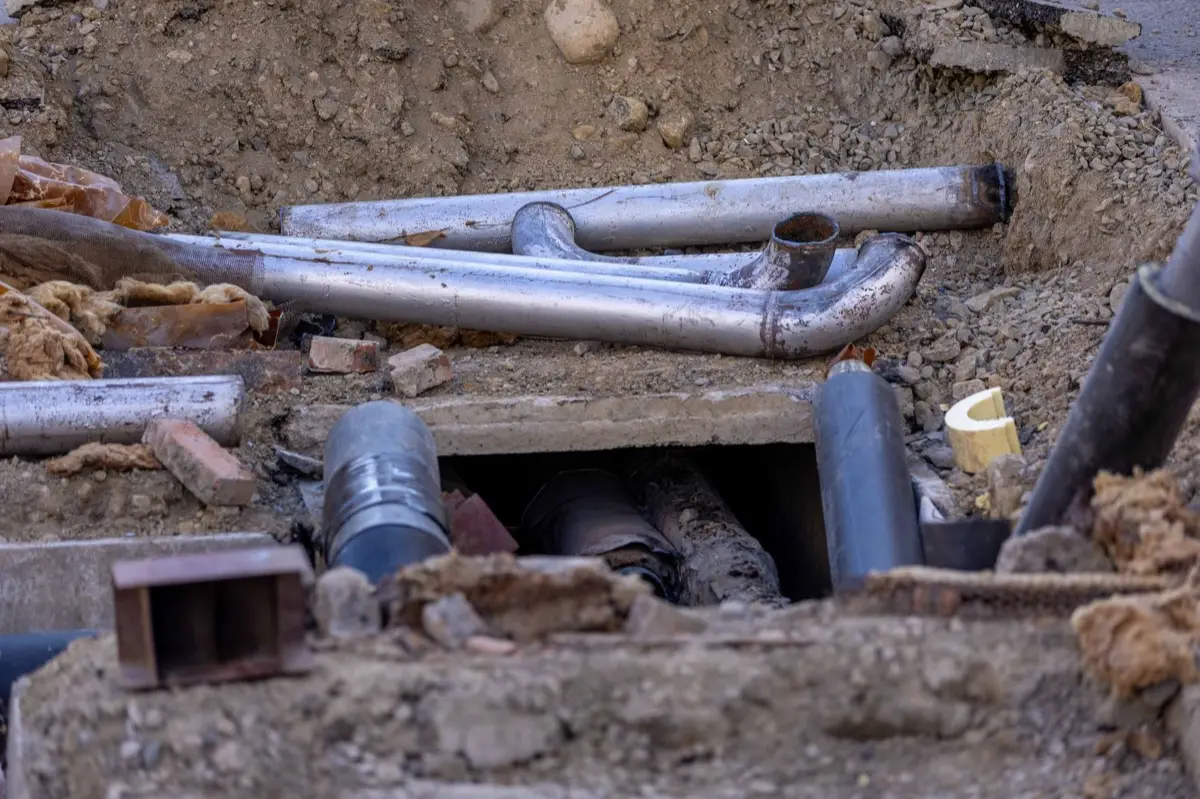
In most Iowa towns, you own the sewer lateral, the pipe that runs from your house out to the city main in the street (or to your septic tank). You are responsible for that lateral right up to the point of connection. The city maintains the main under the road; it does not maintain your line. So a crack, collapse, belly, or root clog on your side of the connection is your problem to fix, not the municipality's. The exact point where your responsibility ends and theirs begins varies by town, so before you assume anything, call your local public works or sewer department and ask them plainly where the line becomes theirs.
Once you know it is your pipe, you know why the repair is a real number. Fixing a lateral is usually one of two jobs. Dig-and-replace trenches open the yard, and sometimes the driveway or a slice of street, to pull the bad section and lay new pipe. Trenchless methods, like pipe lining or pipe bursting, thread a new pipe through the old path with only a couple of access holes. Trenchless is often less destructive, but it is not always possible, and neither one is cheap. The price swings hard with depth, length, and how much concrete sits on top of the line, which is exactly why you want a scope and a written quote before you commit to any path.
A quick reality check on cost: I will not throw a dollar figure at you, because a root cut at one joint and a full collapse under a driveway are not remotely the same job. Get the plumber's number in writing. If the quote makes your stomach drop, that is useful information too, and it feeds directly into the decision in the next two sections.
If the sewer is one of several things wrong with the house, you are really asking a bigger question about a rough property, and I wrote that up here: selling a house that needs a lot of repairs in Iowa.
Why buyers and lenders get skittish
The quiet dealbreaker is not that buyers dislike a sewer repair. It is that a financed buyer often cannot close on a house with an active sewage backup even if they want the place.
When a buyer needs a mortgage, the lender sends an appraiser, and functioning plumbing and waste disposal are part of what makes a home safe and livable. An appraisal exists to protect the lender's collateral, and a house that backs up sewage every time someone showers is a shaky bet for a 30-year loan. If the problem is obvious or shows up at the buyer's inspection, the underwriter can require the line be repaired before closing, which a seller in the middle of it usually cannot swing on the buyer's timeline.
Government-backed loans are the strictest. FHA and USDA loans, which a lot of Iowa buyers lean on, carry minimum property standards that expect safe, working systems, and a functioning sewer is squarely one of them. A live backup fails that on sight, and the deal stalls until it is fixed.
So the pool of buyers who can close on an unrepaired sewer shrinks to two groups: people paying cash, and investors who plan to fix the line themselves and have priced it in. That is not a knock on your house. It is just how financing reacts to a system that is not working, and it is the single biggest reason a sewer problem pushes a sale toward cash. If you would rather not fight that fight at all, here is what selling a house as-is in Iowa actually means before you decide.

Your three options, honestly compared
Whatever the scope turns up, there are three honest ways out. Here they are straight, with the catch on each.
1. Scope, repair, then sell
Get the camera scope, get a written quote, fix the line (dig-and-replace or trenchless), and list on the open market with a clean bill of health. On a house that is otherwise solid, this usually earns the most, because you reopen the door to every financed buyer and you can hand them the receipt. The catch is cash and calendar: you pay the repair now, you may tear up a yard or driveway, and you wait on the plumber and the city's sign-off before you can list. Best when the fix is quotable, your budget is comfortable, and the rest of the house is worth the investment.
2. List it as-is on the MLS
Put it up honestly, broken pipe disclosed, and let buyers come knowing they inherit the repair. You skip the repair spend, but you are fishing in a small pond, because financed buyers still trip on the inspection and the appraisal, and the ones left are hunting a discount. Expect harder negotiation, a longer wait, and a real chance the deal dies when the buyer's inspector runs their own scope. It can work if the fix is minor and the rest of the house shows well. On a full collapse, it often becomes the slow road to the same cash buyer you could have called first.
3. Sell it as-is to a cash buyer
Sell directly to a cash or investor buyer who prices the sewer repair in and handles the pipe themselves. You get less than a polished retail price. That is the honest trade, and I will not pretend otherwise. In exchange you spend nothing more on the line, dig up nothing, chase no plumber, skip the showings, pick the closing date, and get certainty the deal closes, because there is no lender to say no over a backup. On a house that cannot get financed until the sewer is fixed anyway, this often nets closest to a repaired sale once you subtract the cost to fix, the carrying months, and the risk.
| Path | Best when | The catch |
|---|---|---|
| Scope, repair, then sell | The fix is quotable, the house is otherwise solid, you have cash and time | Repair paid up front, torn-up yard or driveway, weeks of waiting before you list |
| List as-is on MLS | The defect is minor and the rest of the house shows well | Small buyer pool, hard negotiation, deals that die at the buyer's scope |
| Sell as-is for cash | Collapsed line, tight timeline, no budget to dig, or many repairs at once | Lower price traded for speed, certainty, and zero more spend |
Here is how a fair cash buyer builds the number, so it is not a mystery: we start with the after-repair value (what the house is worth with a sound sewer and everything working), then subtract the cost to fix the line and anything else it needs, the holding and selling costs, and a margin to make the risk worth it. That is why the offer lands under a repaired retail price, and also why a nastier repair widens the gap. No games, just arithmetic. If you want to see how the rest of a cash sale runs start to finish, walk through how the process works.
One honest note, because it is how I run things: sometimes fixing the pipe and listing is your better move, and I will say so. If the scope finds roots at one joint and your house is otherwise in good shape, clearing it and selling on the open market will likely net you more, and I would rather tell you that than talk you out of money. I am one more option, not the only one. If it is a fit, this is where I buy houses across Iowa.
The bottom line
Selling a house with a broken sewer line is not hopeless. It is a fear problem before it is a sale problem, because the buyer is pricing the worst thing they can imagine until you hand them a scope that says otherwise. Get the diagnosis, learn whose pipe it is (almost always yours, to the connection), and sort the choice honestly. Minor fix, solid house, budget in hand? Repairing and listing usually keeps you on the open market for the most money. Collapsed line, tight timeline, or a stack of other repairs? A cash sale usually wins on what actually lands in your pocket once the fix and the waiting come out.
If you want the honest math on your specific house, backed-up basement and all, tell me about it and I will send a fair, no-obligation cash offer within 24 hours, with no line to dig, no plumber to chase, and no fee. I buy houses across the Des Moines metro and the rest of Iowa, and if fixing the sewer and listing is your smarter move, I will tell you that too.
Selling a house with a broken sewer line: FAQ
Can you sell a house with a broken sewer line in Iowa?
Yes. You can sell a house with a broken sewer line in Iowa. The question is who will buy it and for how much. A minor clog that a plumber can clear or line is close to a normal sale. A collapsed main, a bad belly, or roots that have taken over the pipe narrow your buyer pool, because an active sewage backup scares buyers and can trip up a mortgage. Your three real moves are to scope and repair it, list it as-is on the MLS, or sell it as-is to a cash buyer who handles the pipe themselves.
Is a broken sewer line the homeowner's responsibility or the city's?
In most Iowa towns the homeowner owns the sewer lateral, the pipe that runs from the house out to the city main or the septic tank, and you are responsible for it right up to the point of connection. The city maintains the main in the street, not your lateral. So a crack, collapse, belly, or root intrusion on your side of that connection is your bill to fix, not the city's. Rules vary by municipality, so confirm the exact point of responsibility with your local public works or sewer department before you assume anything.
Do I have to fix a collapsed sewer line before selling?
No. You are not required to fix a sewer line before you sell. If you list on the open market, a financed buyer's lender may require repairs before closing when there is an active backup, which pushes many sellers toward fixing it or toward a cash sale. If you sell as-is to a cash or investor buyer, they price the repair in and fix it themselves, so nothing has to be dug up or lined before closing. Either way, a known sewer defect still has to be disclosed.
How is a broken sewer line diagnosed and repaired?
A plumber runs a camera scope down the line to see the crack, collapse, belly, or root mass and to pinpoint where it is. From there, repair is usually one of two paths: traditional dig-and-replace, where a section of yard, driveway, or even street is trenched open, or a trenchless method such as pipe lining or pipe bursting that needs fewer holes. Both are expensive and disruptive, and the price swings with depth, length, and access, so get a scope and a written quote from a licensed plumber before you decide anything.
Do I have to disclose a broken sewer line when selling in Iowa?
Yes. Iowa requires most sellers to give the buyer a written property condition disclosure, and selling as-is does not erase your duty to disclose what you know. A known sewer backup, a failed camera scope, or a collapsed lateral belongs on that form. As-is means you are not agreeing to make repairs, not that you get to stay quiet about the condition. Disclosing the sewer problem up front also keeps the deal from blowing up at the buyer's inspection.