Selling a house with code violations in Iowa

A code violation is a to-do list somebody else wrote for your house. The city inspector picks the tasks, the city picks the deadline, and if you ignore it the fines quietly grow while the paperwork stacks up on the counter. Here's the part nobody says out loud: selling a house with code violations is still completely allowed in Iowa. The only real question is who fixes them, and when.
The short answer is yes, you can sell, and you have three basic routes. Fix the violations yourself before closing. Hand the buyer a credit or a lower price so they fix them. Or sell the house as-is to a cash buyer who takes it violations and all. Which route fits depends on how bad the violations are, whether a bank is involved, and how fast you want to be done.
Each of these sales hinges on the same trade. Fixing the violations costs money and time you may not have, and leaving them shrinks the pool of buyers who can actually close. The good news is that one of your options makes the whole problem someone else's job.

What counts as a code violation
A code violation is just a way your house falls short of a local rule: a building code, a housing or rental code, or a zoning rule. Enforcement in Iowa is local, so the standards in Des Moines, Ankeny, and Ames aren't identical, and a rental in one town can trip a rule that doesn't exist two counties over. The violation usually arrives one of three ways: a neighbor complaint, a rental or point-of-sale inspection, or a permit that was opened and never closed out.
The usual suspects are boring and common:
- Electrical: missing GFCI outlets near water, ungrounded two-prong outlets, an old fuse panel, or DIY wiring.
- Missing or misplaced smoke and carbon monoxide detectors.
- Unpermitted work: a finished basement, an added bathroom, a deck, or a garage conversion done without a permit.
- No egress window in a basement bedroom.
- Plumbing that was cobbled together, plus older material like polybutylene supply lines.
- Structural and roof issues, peeling exterior paint, or a railing that doesn't meet height rules.
The one I see most is the basement the previous owner "finished themselves" over a couple of winters, no permit ever pulled. It looks fine. On paper it doesn't exist.
A code violation isn't a verdict on your house. It's a gap between what's there and what the local rulebook wants there. Gaps are fixable, and they're sellable.

Do you have to fix them before selling?
Legally, no. Iowa does not require you to bring a house up to code before you sell it, and there's no rule that forces repairs as a condition of transferring the property. You can sell the house as-is with the violations right where they sit.
Two things complicate that clean answer. The first is disclosure. Iowa's residential real property disclosure law requires you to put known defects and material conditions in writing for the buyer, and you can read the statute yourself under Iowa Code Chapter 558A. Selling as-is does not switch that off. You still have to tell the buyer what you know.
The second is money, specifically the buyer's. Most mortgage lenders won't fund a loan on a house with health or safety violations, and government-backed loans are stricter still. FHA, VA, and USDA loans come with minimum property standards, and an appraiser who spots a safety issue can write the appraisal "subject to repairs." When that happens, either you fix it or the deal dies. So the honest version is this: you don't have to fix violations to sell, but if your buyer needs a bank, the bank often does.
Here's how the three routes stack up.
| Route | Who does the work | Speed | Best when |
|---|---|---|---|
| Fix before closing | You, before listing | Slowest | Violations are cheap and the house shows well otherwise |
| Credit or price cut | The buyer, after closing | Medium | Buyer has cash and wants the project |
| Sell as-is for cash | The cash buyer | Fastest | You want it done, no repairs, no bank contingencies |
None of these is automatically right. If the fix is a fifty-dollar smoke detector, fix it. If the fix is an unpermitted addition the city wants torn out or re-inspected, that's a different weekend.
How violations transfer (or don't) to the buyer
This is the part people miss, and it's the part that actually matters at closing. There are two kinds of code problems, and they travel differently.
The first kind is the open condition: the wiring, the missing egress window, the unpermitted addition. That physically stays with the house, so it becomes the new owner's problem the moment they take title. Nothing follows you personally; it follows the property.
The second kind is the paper problem: unpaid fines and recorded correction orders. Those can attach to the property as a lien. In Iowa, the way this surfaces is through the abstract of title, the running legal history of the property that gets updated and examined before nearly every sale. Most of the country uses title insurance alone; Iowa still leans on the abstract, and that's usually where a municipal lien or an unpaid fine gets caught. A lien has to be cleared or accounted for out of the proceeds before the buyer gets clean title. That doesn't kill the sale. It just means the money comes out somewhere.
Open violations follow the house. Unpaid fines follow the title. Neither one follows you to your next address, as long as they're handled honestly at the table.
When I buy a house with violations, I'd rather find the open orders early than at the closing table, so we deal with the abstract up front and price around whatever's really there.
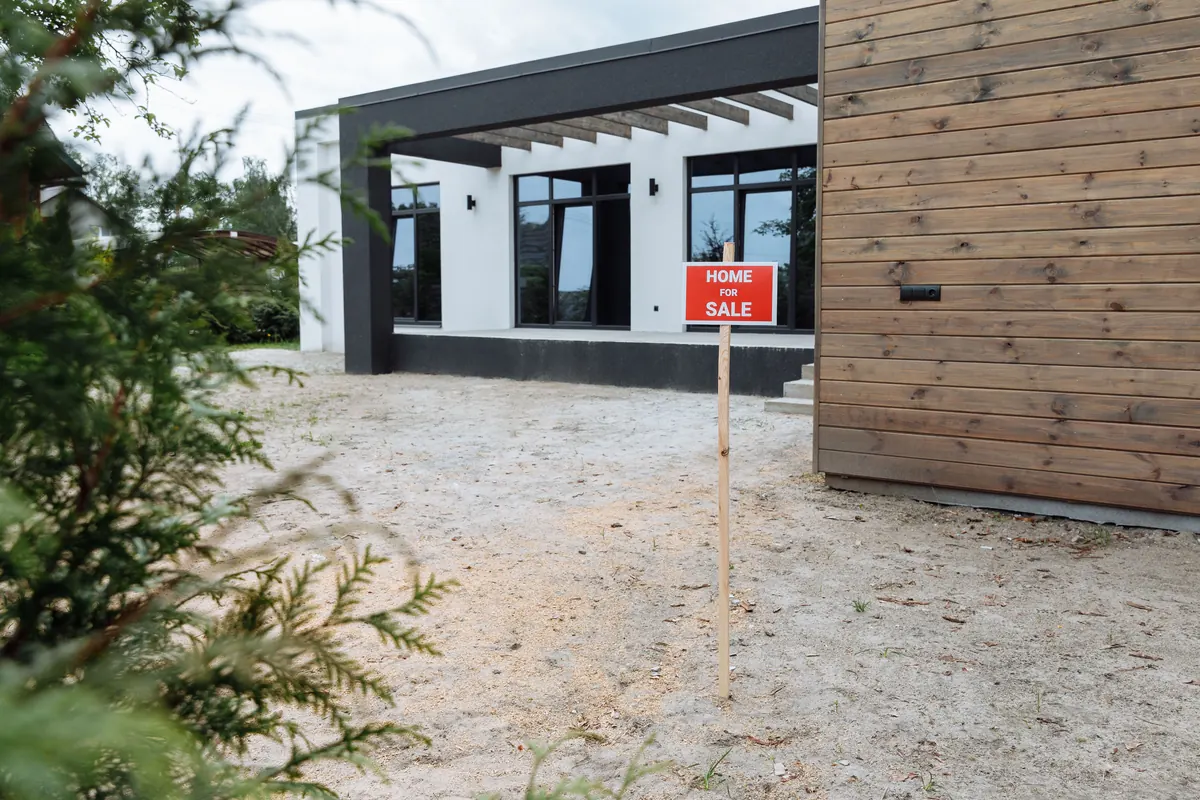
What it's worth with open violations
A buyer looking at a house with open violations does quiet math. They take what the place would be worth fixed, subtract the cost to cure each violation, and then subtract a little more for the risk and the hassle of chasing permits and inspectors. Fewer buyers can qualify, so there's less competition bidding the price back up. That's the whole reason violations pull value down: not the violation itself, but the cost and the shrunken buyer pool behind it.
On the open market that shows up as an appraisal "subject to repairs," a re-trade after inspection, or a listing that sits. With a cash buyer, the same math happens, just out loud and up front. A fair cash offer is built like this:
- Start with the after-repair value, what the house is worth once it's fixed and up to code.
- Subtract the real cost of the repairs and the violations.
- Subtract the carrying and transaction costs.
- Subtract a modest margin, because this is a business.
The violations are already inside that number, which is the point. You don't write a check for the repairs; the offer reflects them. If you want to see how that math lands on your specific house, tell me about the property and I'll walk you through it line by line, no obligation. There's more on how condition affects price in my guide to selling a house in poor condition in Iowa.
Selling as-is to a cash buyer
If you'd rather skip the whole fix-and-list cycle, this is the clean exit. The steps are short:
- You tell me what you know, violations included. Disclosure protects both of us.
- I look at the house as it is. No staging, no pre-sale repairs, no scrubbing.
- I make a fair cash offer with the violations already priced in.
- We close on your timeline, and I take it from there: the repairs, the permits, and the conversations with the city.
I've bought houses with unpermitted additions, open correction orders, and the occasional basement that technically doesn't exist. I deal with the inspector so you don't have to, and because there's no lender in a cash deal, the appraisal "subject to repairs" trap simply never comes up. If your house needs real work, my guide to selling a house in any condition in Iowa covers what "any condition" actually means.
I'm a local buyer, not a national call center, and I work across Iowa: the Des Moines metro, Ames, and the towns in between. That matters here, because code enforcement is local, and knowing how a specific city handles a specific order is half the job. You can read more about how I work or see where I buy.
You don't have to understand the code to get out from under it. That part's my job. Your job is deciding you're done.
The bottom line
Selling a house with code violations in Iowa is normal, legal, and more common than the certified letter makes it feel. You can sell. You don't have to fix anything first. You do have to disclose what you know, and financing is the real pivot: a bank buyer usually needs the violations gone, a cash buyer doesn't. If you want the fastest path with none of the repairs, the paperwork, or the inspector calls, send me the address and I'll give you a fair, no-obligation cash offer with the violations already baked in. If it also helps to compare against the traditional route, the CFPB's owning-a-home guide is a solid neutral read.
Code violations and selling: FAQ
Do I have to fix code violations before selling my house in Iowa?
No. Iowa doesn't require you to bring a house up to code before you sell it. You can sell as-is. The catch is financing: if your buyer needs a mortgage, the lender's appraiser can flag health and safety issues and require repairs before the loan funds. A cash buyer removes that hurdle because there's no lender.
Do I have to disclose code violations to a buyer?
Yes. Iowa's residential seller disclosure law requires you to put known defects and material conditions in writing for the buyer. Selling as-is does not cancel disclosure. Hiding a known violation is how you turn a solved problem into a lawsuit, so disclose what you know and let the buyer decide.
Will code violations show up on the title or abstract?
They can. Unpaid municipal fines and recorded correction orders can attach to the property as a lien, and in Iowa those get flagged when the abstract is updated and examined before closing. Liens usually have to be cleared or accounted for out of the sale proceeds so the buyer receives clean title.
Can I sell a house with unpermitted work?
Yes. Unpermitted work, like a finished basement or an added bathroom that never got a permit, is one of the most common issues we see. You disclose it, and a cash buyer can take the house and deal with the permitting or the city afterward. On the open market, a lender may treat unpermitted square footage as if it doesn't exist.
How much do code violations lower a home's value?
There's no fixed number. A buyer subtracts the cost to fix each violation plus a cushion for the hassle and risk, and fewer competing buyers can soften the price further. The upside of selling as-is to a cash buyer is that the offer already prices the repairs in, so you don't pay for them out of pocket.