Selling an Acreage in Iowa: Land, Buildings, and a Smaller Buyer Pool

An acreage sells the land and the buildings as two different problems. Picture the buyer who fell for the place on the drive in, the tree line, the pole barn, the quiet, and then their lender starts asking about the well, the septic, how many acres come with it, and whether the county even plows the road out front in winter. Selling an acreage in Iowa is rarely about the house itself. It is about everything around the house: the water in the ground, the waste in the field, the outbuildings nobody wants to finance, and a buyer pool a fraction the size of the one in town.
Here's the honest version. An acreage is a rural home sitting on several or more acres, usually with a barn, a shop, or other outbuildings, and it sells on a different rulebook than a town lot. The well and the septic have to check out, the access and any easements have to be clean, the appraisal is harder because there are few comparable sales nearby, and financing gets strange fast, because some lenders cap how much land they will lend on or refuse to count a barn or ag ground toward value. That narrows your buyers to rural folks, hobby-farmers, and investors. For a dated or as-is acreage, a cash or land buyer is often the cleanest fit.
The house might be the part you have lived in, but the well in the yard, the septic field out back, the gravel lane, and the pole barn are the parts that decide who can actually close. Get those straight and you can sell an acreage to just about anyone. Leave them fuzzy and even a cash-flush buyer's bank walks.
Why an acreage is really two sales in one
A house in town is one thing: four walls on a small lot, priced against the house that sold three doors down last month. An acreage is two things bolted together. There is the home, and there is the land, and a buyer, an appraiser, and a lender all look at them separately. That split is the root of almost every acreage headache.
The buildings part behaves like a normal house sale. The land part behaves like something closer to a commodity, valued by acres, tillable ground, timber, road frontage, and what the neighbors would pay to farm it. When those two values do not line up neatly, and on rural property they rarely do, the deal gets complicated. A gorgeous remodeled farmhouse on ten acres can be hard to sell if the land skews the price past what any single buyer wants to carry.
(An aside from doing this six years: sellers almost always price the emotion of the land and the buyer prices the utility of it. That gap is where most acreage listings stall.)
So the first mental shift is this. You are not selling a house with a big yard. You are selling a small piece of real estate and a chunk of Iowa ground in the same transaction, and every step below is really about getting those two halves to agree.
The well and the septic decide the deal
In town, water and sewer are somebody else's problem. On an acreage, the water comes from a private well in your yard and the waste goes to a septic system in your field, and those two things sink more rural deals than anything else. A buyer's lender will ask about both before it funds a dollar.
Start with the septic, because Iowa has a specific rule. Under the state's time-of-transfer law, the private septic (onsite wastewater) system generally has to be inspected before the property is sold or transferred, and a system that fails usually has to be repaired or the fix has to be handled in the sale terms. You can read the state's own explanation of the time-of-transfer inspection requirement from the Iowa DNR. A brand-new septic is expensive, so a failing one is a real number in the deal, not a formality. If yours has already failed, the honest playbook is the same one I wrote for selling a house with a failed septic system in Iowa.
The well is a lighter lift but not zero. There is no time-of-transfer inspection the way there is for septic, but buyers and their lenders will almost always want a water quality test, and government-backed loans often require one. Bacteria, nitrates, or a well that cannot keep up with the house will scare a financed buyer off. If your water is the problem, here is the full walk-through on selling a house with a bad well in Iowa.
A retail buyer wants to move into a house. They do not want to inherit a science project in the yard. The second a well test or a septic inspection comes back ugly, half your buyer pool quietly disappears.
Gravel roads, legal access, and easements
A town lot fronts a public street and nobody thinks twice. An acreage might sit at the end of a long gravel lane, share a driveway with a neighbor, or reach the county road across someone else's ground. That access has to be legal and on paper, not just "we've always driven in that way."
If your driveway crosses a neighbor's land, there needs to be a recorded easement that runs with the property, or a buyer's title work and their lender will balk. The same goes for utility lines, drainage tile, and any shared road agreements. Easements are not automatically a dealbreaker, but a fuzzy or disputed one absolutely can be. I got into the weeds on that in selling a house with an easement dispute in Iowa.
Road maintenance matters too, and it is very Iowa. A county-maintained gravel road is one thing. A private lane that you and two neighbors keep up by handshake is another, and a buyer will want to know who grades it and plows it before they commit to living three miles out. None of this is a reason the acreage cannot sell. It is a reason to have the paperwork clean before a buyer's attorney starts asking, so a small question does not turn into a two-week delay.
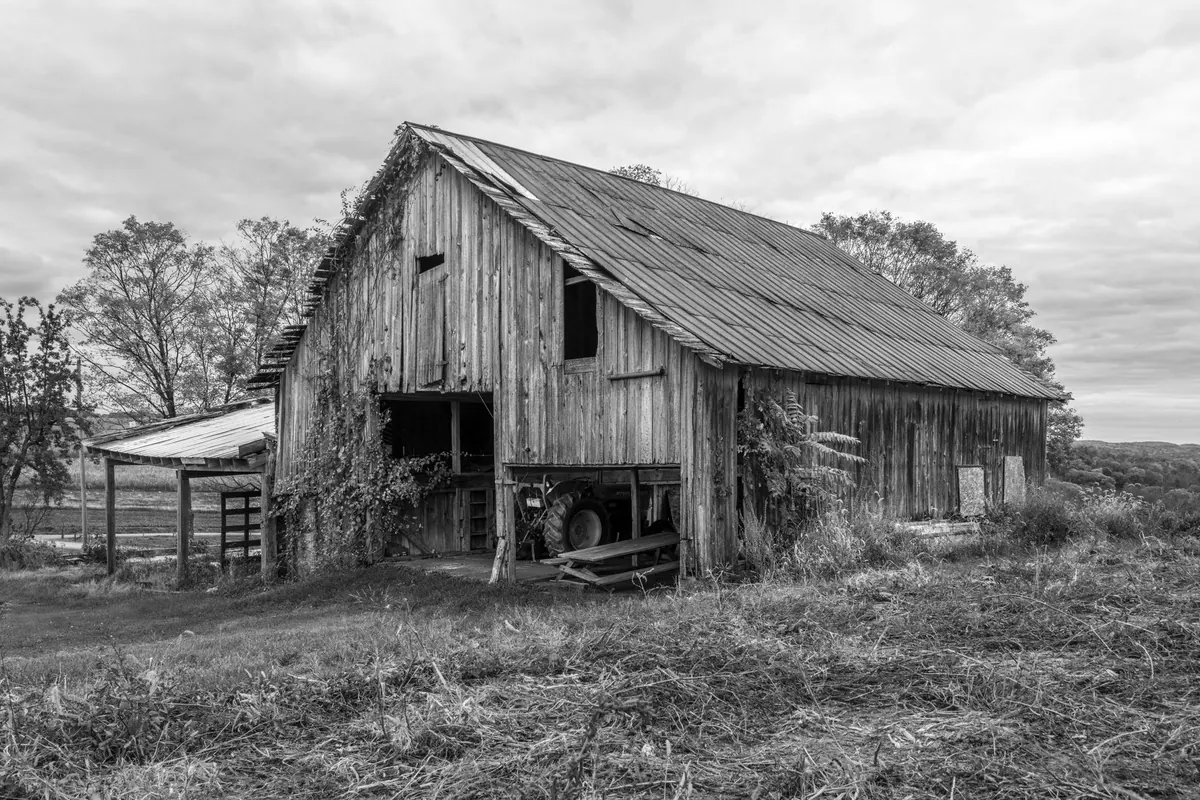
Barns, shops, and the financing trap
Here is where a lot of acreage sales quietly break. The outbuildings you love, the pole barn, the machine shed, the old dairy barn, the shop, are often worth very little to a residential lender, and the extra acres can work against a buyer too.
Many standard mortgage lenders cap how much land they will lend against, sometimes just a handful of acres, and they will not count a barn or tillable ground toward the home's appraised value. So a buyer can be fully approved for the house and still come up short on the acreage, because the bank simply will not finance the parts that made your property special. That gap has to be covered with a bigger down payment, a different loan, or a lower price.
There are real paths for the right buyer. USDA rural development loans are built for exactly this kind of rural property and can help a qualified buyer, and there are farm-credit and portfolio lenders who understand land. But every one of those adds conditions, paperwork, and time, and each narrows the field of buyers who qualify. The plain reality is that financing an acreage is harder than financing a ranch in a subdivision, and that shows up as fewer offers and longer waits.
This is the single biggest reason a cash or land buyer is often the smoothest exit for an acreage. No lender means no cap on the acres, no fight over what the barn is worth, and no appraisal that comes in light because there was nothing comparable to compare it to.
Why acreages are hard to appraise
Appraisals lean on recent sales of similar properties nearby. In a subdivision there are a dozen of those within a mile. In the country there might be one rural sale in the last year within ten miles, and it had a different amount of land, a different set of buildings, and a different road. The appraiser is stuck making bigger adjustments off thinner data, and the number gets less predictable.
That uncertainty costs you time and deals. A financed sale can crack when the appraisal lands under the contract price, and on acreages that happens more often simply because the comparable sales are so thin. If that is where your deal broke, the fix is its own topic, and I covered it in selling a house that failed appraisal in Iowa.
Put the smaller buyer pool together with the shakier appraisals and you get the thing every rural seller notices: acreages sit longer. A traditional Iowa listing might take 30 to 60 days to reach contract and another 30 to 45 to close, and rural property routinely runs past that. It is not that your place is worth less. It is that it takes longer to find the one buyer it fits, and longer to get that buyer's financing across the line.
Who actually buys an Iowa acreage
The buyer pool for an acreage is smaller and more specific than for a house in town, and knowing who you are actually selling to changes how you sell it.
- Rural lifestyle buyers. Families who want space, animals, a shop, and distance from neighbors. They love the property but often need the trickier financing above, so their offers can be slower and shakier.
- Hobby-farm and ag buyers. People who want a few tillable acres or pasture. They may care more about the ground than the house, which changes how they value a dated home.
- Investors and land buyers. Cash buyers who see past a rough house to the value of the land and buildings, and who can close without an appraisal or a lender.
For a clean, updated acreage with a good well and septic, the open market and a patient timeline usually work fine. For a dated, inherited, or rough acreage, the math shifts. The retail buyers who want move-in ready are exactly the ones whose loans struggle with rural property, and the buyers who do not mind the condition are usually the cash and land folks. That is why an as-is sale so often wins out here. Here's how a true as-is sale in Iowa actually works, and it applies to the whole place, house, barn, and ground together.
I've bought more than 100 homes across Iowa in six years, plenty of them rural: tired farmhouses, junk-filled outbuildings, places a bank would not touch. A cash offer on an acreage is calculated the same honest way as any other, after-repair value, minus repairs, minus the costs of the sale, minus a fair margin, and it folds the well, the septic, and the outbuildings into one number instead of a punch list you have to clear first. If a traditional listing would net you more, I will tell you that too. No harm, no foul, I am just one more option. You can read more about how I work or see where across Iowa I buy.
What Iowa makes you disclose
Selling as-is does not mean selling silent. Iowa requires most residential sellers to complete a written condition disclosure statement, and on an acreage that means being straight about the well, the septic, the water quality, drainage, any easements, and known problems with the house or buildings. The state lays out what belongs on it under Iowa Code Chapter 558A.
The good news for a stressed seller: disclosure is about what you know, not about fixing anything. You are allowed to sell a house with a failing septic or a weak well. You just have to say so. A cash buyer who is already planning to take the property as-is is not scared off by an honest disclosure, because the condition is already baked into the offer.
One more Iowa wrinkle worth planning for: Iowa is an abstract state, so closing involves updating and examining a physical abstract of title rather than buying title insurance. It adds a few days and regularly trips up out-of-state sellers, and on rural land with old easements and boundary quirks it is one more reason to work with a local buyer who does this every week.
The bottom line
An acreage is not a harder house to sell. It is a house and a piece of land sold at the same time, and the land is where the surprises live: the well, the septic, the access, the outbuildings a bank will not finance, and a buyer pool that takes longer to find. Handle those pieces up front and a clean acreage sells well on the open market. Leave them tangled, or start with a dated and rough place, and the smart money is usually a cash or land buyer who takes the whole thing as-is.
If your acreage is dated, inherited, or carrying a well or septic problem you do not want to pour money into, that is exactly the situation I buy in. Tell me about the place, the buildings, and the ground, and I'll give you a straight read on your options, including the ones that are not selling to me. Request a free, no-pressure cash offer or call 515-216-0652 and we'll walk your property through together.
Selling an acreage in Iowa: FAQ
How do you sell an acreage in Iowa fast?
Get the pieces a buyer's lender will ask about in order first: a working well with a clean water test, a septic system inspected as the state requires at time of transfer, clear legal access to a maintained road, and a straight answer on any easements. If the acreage is dated or rough, the fastest clean route is usually a cash or land buyer who does not need an appraisal or financing and can close in as little as 7 days.
Why do acreages take longer to sell than houses in town?
The buyer pool is smaller. A town house can appeal to almost anyone with a mortgage, while an acreage only fits rural buyers, hobby-farmers, and investors, and many of them need special financing. Appraisals are also slower and less certain because there are few comparable rural sales nearby, so acreages sit on the market longer than a comparable house on a town lot.
Why is financing an acreage in Iowa harder?
Many standard lenders cap how much land they will lend on and will not count outbuildings, barns, or tillable ground toward the home's value, so a buyer can be approved for the house yet come up short on the acreage. USDA rural development loans can help some buyers, and there are ag and portfolio lenders, but each adds conditions and time. A cash buyer removes the financing problem entirely.
Do I have to inspect the septic before selling an acreage in Iowa?
In most cases yes. Iowa's time-of-transfer rule requires the private septic (onsite wastewater) system to be inspected before the property is sold or transferred, and a failing system usually has to be addressed or handled in the sale terms. A private well is not inspected the same way, but buyers and their lenders will almost always want a water quality test. A cash buyer can take the property with these items open and factor them into the offer.
Can I sell an acreage as-is to a cash buyer?
Yes, and for a dated, rough, or inherited acreage it is often the cleanest option. A cash buyer brings no lender, no appraiser, and no financing conditions, buys the land, house, and outbuildings together as-is, factors the well, septic, and repairs into a fair offer, and closes on your timeline. You still disclose known defects on Iowa's condition disclosure, but you skip the repairs and the waiting.