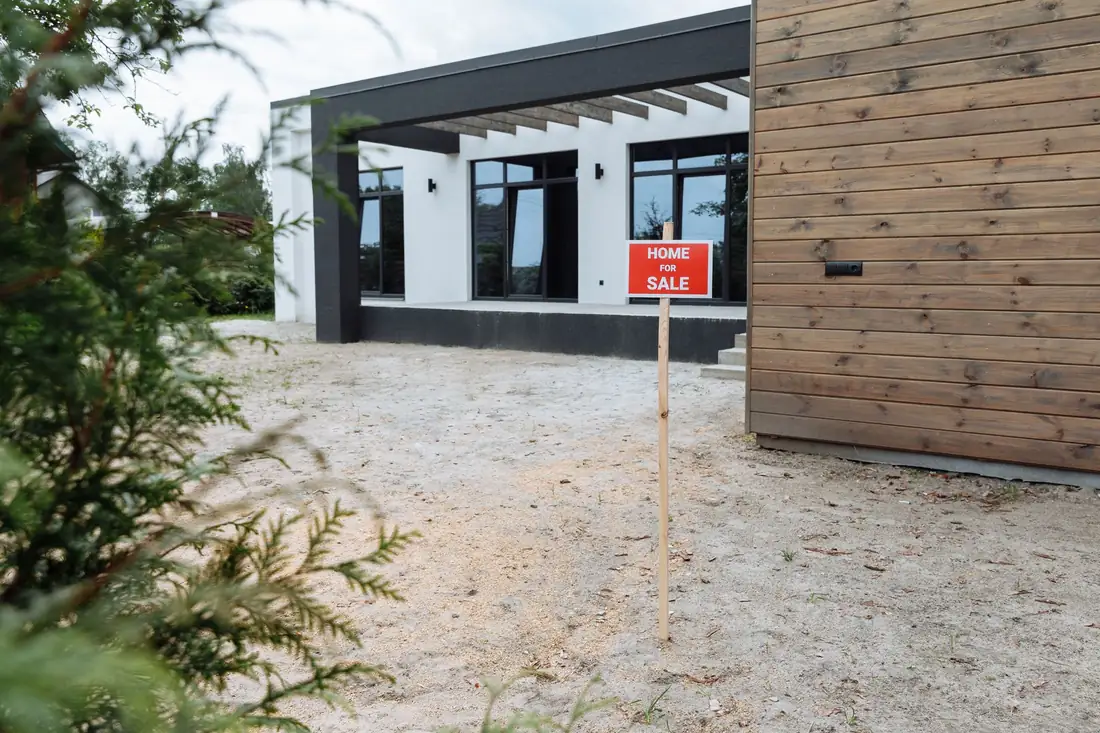
Selling a house you owe more than it's worth in Iowa
Owing more on a house than it's worth turns a sale into subtraction. You run the math the normal way, sale price minus what's left on the loan, and the number comes back wearing a minus sign. Maybe the payoff quote landed higher than you guessed. Maybe the value slid after the rough sale two doors down. Maybe there's a second mortgage still riding along that you'd half forgotten about. Selling a house you owe more than it's worth is not the kind of sale that ends with someone sliding a check across the table. It's a question about who covers the gap between what the house brings and what the bank is owed.
Here's the honest version. Yes, you can sell a house you owe more on than it's worth, but that gap has to be dealt with by somebody. If you're only slightly underwater, you can usually bring cash to the closing table to cover the difference and walk away clean. If you're deeply underwater, that's a different animal: you'll likely need your lender's cooperation through a short sale (they agree to accept less than the full payoff), or you look at a loan modification, or, if you're already behind, other paths that keep you out of foreclosure. A cash buyer can close fast and as-is, but no buyer on earth can pay more than the house is worth, so speed by itself doesn't erase a big gap.
It all reduces to one number: the distance between what a buyer will actually pay for the house and what you still owe on it. How wide that gap is decides every move you make next.

What "underwater" really means (and your true number)
Underwater, upside-down, negative equity: three names for the same thing. You owe more on the mortgage than the house would sell for. It's more common than people admit, and it doesn't mean you did anything wrong. Values dip, loans get refinanced, a second mortgage gets stacked on, and the numbers cross.
Before you panic or make a move, get your real number, because a guess will lie to you in both directions. Two pieces:
- What you actually owe. Call your lender and ask for an official payoff quote, not the balance on your statement. Payoff includes accrued interest and any fees, so it's usually a little higher than the balance. Then add every other loan against the house: a second mortgage, a HELOC, a tax lien, a contractor's lien. All of it has to clear at closing.
- What it would really sell for. Not the Zestimate, not what the neighbor swears they got. A realistic sale price in today's market, minus the cost of selling. If you want the fuller picture of that side, here's how much you actually lose selling a house as-is.
Subtract owed from sale price. A small negative number means you're slightly underwater, a gap you might cover out of savings. A big one means you're deeply underwater, a gap no amount of good staging closes. That single distinction drives everything below, and it's the same reason plain old selling a house that still has a mortgage on it is easy when you have equity and knotty when you don't. The federal Consumer Financial Protection Bureau's mortgage tools are a decent neutral place to sanity-check terms while you're at it.
Slightly underwater is a checkbook problem. Deeply underwater is a permission problem, and the permission comes from your lender.

Your real options when you owe more than it's worth
There's no single right answer, only the one that fits the size of your gap and your situation. Here are the honest choices, catch and all.
- Bring cash to closing. If the gap is small, you can pay the difference yourself and sell normally. You lose the cash, but you keep your credit clean and you're done. This is the go-to when you're slightly underwater.
- Wait and pay it down. If you can stay and keep making payments, time chips at the balance and, hopefully, the value recovers. Only works if staying put is realistic and you're not bleeding money to hold the place.
- Ask about a loan modification. Your lender changes the terms (rate, length, sometimes the balance) to make payments workable. It's a "keep the house" tool, not a "sell it" tool, but if selling isn't actually what you want, it belongs on the list.
- Negotiate a short sale. The lender agrees to let the house sell for less than the full payoff and accepts the shorter amount. This is the main road when you're deeply underwater. More on it below.
- If you're already behind, act early. Once default is in the picture, options like a deed in lieu or other workouts come into play, and the timeline matters a lot. The federal HUD guide to avoiding foreclosure lays these out, and calling your lender before you miss a payment keeps the most doors open.
One thing I'll say plainly, because it's easy to get talked out of: if your gap is small and you have any breathing room, covering it and selling normally is usually the least painful path. The heavier machinery (short sale, workouts) is for when the gap is genuinely out of reach.
Where a cash buyer helps, and where it can't
This is the part I want to be square with you about, because a lot of "we buy houses" ads blur it on purpose. A cash sale is real and it's useful, but it is not a magic wand for negative equity.
What a cash buyer like me actually brings: a fast close (as few as 7 days, versus 30–60 days to even get a traditional Iowa listing under contract), no commission, no repairs, no showings, and certainty that the deal closes because there's no bank underwriting the buyer. Here's how the process works start to finish, no mystery to it.
What a cash buyer cannot do: pay you more than the house is worth. The offer gets built from the after-repair value, minus repairs, minus holding and selling costs, minus a margin to make the risk worth it. That's why it comes in under retail, and it's also why cash alone can't close a deep gap. If you owe far more than the house is worth, a straight cash sale doesn't work unless your lender agrees to a short sale first.
So where does cash actually help an underwater seller?
- Slightly underwater: a fast, clean cash sale plus a modest amount from you to cover the shortfall can be simpler and cheaper than months of carrying costs on a listing.
- Deeply underwater, doing a short sale: a cash buyer who has closed short sales can be a strong partner, because a reliable, fast, as-is offer is exactly what a lender wants to see when it's deciding whether to approve the short sale.
Anyone promising to make a big gap vanish without the lender's sign-off is selling you a story. If a cash sale isn't your best move, I'll tell you that to your face. I'd rather be one honest option than push you into the wrong one. When it is a fit, here's where I buy houses across Iowa.

The short sale path in Iowa
When the gap is too big to cover, the short sale is the main way to sell without going through foreclosure. In plain terms: your lender agrees to accept less than the full payoff so the house can change hands. They eat part of the loss because a short sale usually costs them less than foreclosing would.
How it tends to go:
- You show hardship. Lenders want a real reason (job loss, medical bills, divorce, a move you can't avoid) plus documentation of your finances.
- You market the house and get an offer. A clean, credible offer moves this along. A cash offer with no financing to fall through is easy for a lender to say yes to.
- The lender reviews and approves. This is the slow part. It takes longer than a normal sale, and the lender, not you, gets the final say on the price.
- You close. In Iowa the abstract of title still has to be updated and examined before closing, so build in a few extra days for that step.
Two things I won't gloss over. First, a short sale does ding your credit, though generally less than a foreclosure does, which is the main reason people choose it. If you're weighing the two, read short sale vs foreclosure in Iowa before you decide. Second, get the approval in writing, and ask a specific question: does the lender waive its right to come after you for the remaining balance (the deficiency)? Whether they can and whether they will depends on your loan and the agreement, so this is worth a conversation with an attorney. The CFPB's plain-English rundown on what a short sale is is a good first read.
A short sale isn't a favor the bank does for you. It's the math working out better for them than a foreclosure. That's leverage, and it's on your side.
The bottom line
Selling a house you owe more than it's worth isn't hopeless, it's just a math problem with your lender sometimes sitting at the table. Get your true number first: the full payoff plus every lien, against a realistic sale price. A small gap is a checkbook problem you can cover and sell normally. A big gap is a short sale conversation, where a fast, certain cash offer can actually be the thing that gets the lender to yes.
If you want the honest read on your specific house and gap, tell me about it and I'll give you a straight answer, a fair cash offer if it fits, and a nudge toward a short sale or a normal listing if that serves you better. I buy houses across the Des Moines metro and the rest of Iowa, with no commissions and no games. And if selling for cash isn't your smartest move, I'll be the first to say so.
Underwater on your mortgage: FAQ
Can you sell a house if you owe more than it's worth?
Yes, but the gap between the sale price and your loan payoff has to be covered by someone. If you are only slightly underwater, you can usually bring cash to closing to make up the difference. If you are deeply underwater, you typically need your lender to approve a short sale, accepting less than the full payoff, or you look at a loan modification or another workout. No buyer, cash or financed, can pay more than the house is worth.
What does it mean to be underwater or upside-down on a mortgage?
Underwater, upside-down, and negative equity all mean the same thing: you owe more on the mortgage than the house would sell for. To find your real number, get an official payoff quote from your lender (which includes interest and fees, not just the balance), add any second mortgage, HELOC, or liens, and compare that total to a realistic sale price. If the total owed is higher, you are underwater.
Can a cash buyer buy a house that has negative equity?
A cash buyer can close fast and as-is, but a cash offer cannot pay more than the house is worth, so speed alone does not erase a big gap. If you are slightly underwater, a cash sale plus a little cash from you to cover the shortfall can work. If you are deeply underwater, a cash sale only closes when your lender approves a short sale. Any buyer who promises to make a deep gap disappear without lender approval is not being straight with you.
What is a short sale, and how does it work in Iowa?
A short sale is when your lender agrees to let you sell the house for less than the full payoff and accepts the shorter amount. You apply with a hardship reason and documentation, the lender reviews the offer, and it takes longer than a normal sale. In Iowa the abstract of title still has to be updated and examined before closing. Get the approval in writing, and ask whether the lender waives its right to pursue you for the remaining balance.
Should I keep paying the mortgage while I try to sell an underwater house?
If you can keep paying, it usually protects your credit and keeps your options open, including a normal sale where you cover a small gap. Stopping payments can push you toward default and foreclosure, which does more damage than a short sale. If you cannot keep up, call your lender early and get advice before you miss payments, because the sooner you act, the more paths stay open.