Selling a house in a flood zone in Iowa
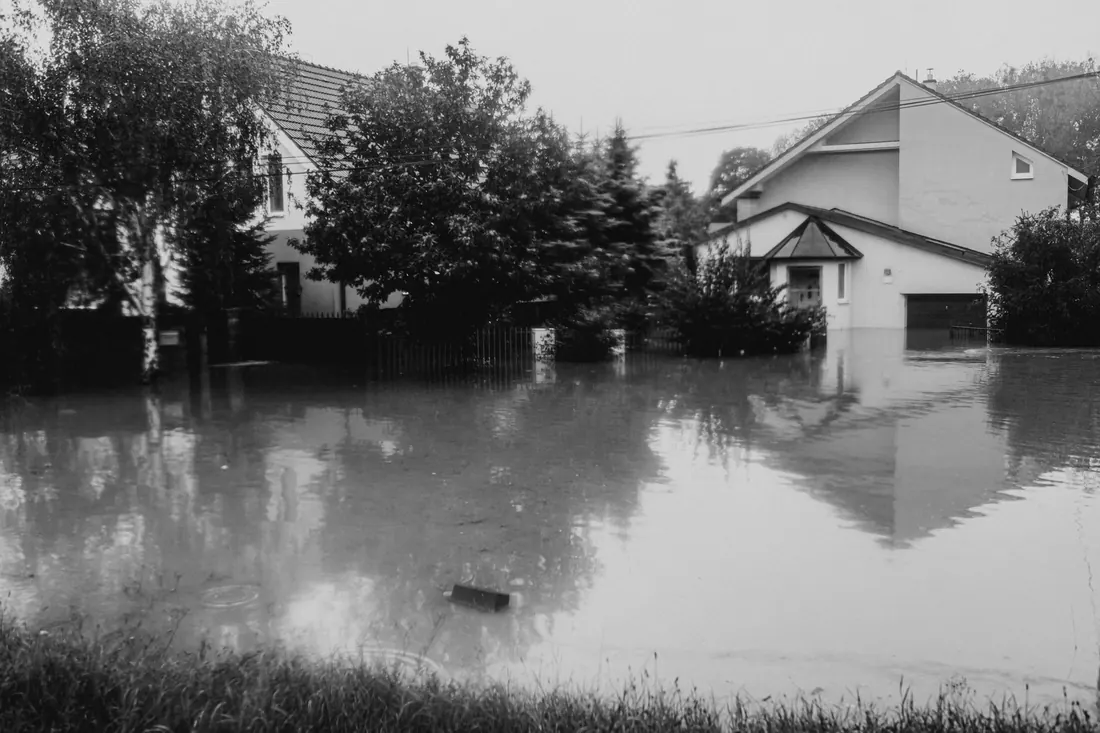
A flood zone doesn't care whether your basement has ever taken on water. The map decides, and the map is public. You could own the driest house on the block, forty years without a wet carpet, and still watch a buyer's lender staple a flood insurance quote to the deal that reads like a second car payment. That's the odd cruelty of selling a house in a flood zone: the risk on paper can outrun the risk in your actual crawlspace, and paper is what buyers borrow against.
Here's the honest version. A house inside a FEMA Special Flood Hazard Area (the high-risk zones drawn on the flood map) triggers lender-required flood insurance for any buyer using a mortgage. That extra monthly cost, plus the plain stigma of the word "flood," shrinks the pool of financed buyers and softens the offers that do come. You can still sell. Your paths are the same three most tough-house sellers face: reduce the risk and list, list as-is and price for it, or sell as-is to a cash buyer who needs no lender's flood-insurance sign-off.
The flood map, not your house's real water history, is what quietly runs this sale. It sets a cost that every financed buyer has to carry, and that cost is what decides how many buyers can afford your place at all.

What a flood zone actually does to a sale
Start with the part that trips everybody up: a flood zone is a lending problem before it's a water problem. A buyer can love the house, have great credit, and still get squeezed. Not by the house. By the map behind it.
Here's the mechanism. If a house sits in a high-risk zone (a Special Flood Hazard Area, the ones labeled with an A or a V on the FEMA map) and the buyer uses a federally backed mortgage, the lender requires flood insurance to close. That premium rides on top of the mortgage, the taxes, and the homeowner's insurance, every single month, for as long as they own the place. A house that pencils out at one payment suddenly pencils out at a bigger one, and some buyers who qualified on paper no longer do. The cost of flood insurance through the National Flood Insurance Program varies a lot by elevation and zone, which is exactly why the surprise on a buyer's face is real.
Then there's the softer drag: stigma. Iowa knows floods. Cedar Rapids in 2008 put a chunk of the city underwater, and Des Moines has its own long memory of the rivers getting out of their banks. Say the word "flood zone" and a buyer's brain runs to those pictures whether your house has ever been touched or not. Fewer buyers, more nerves, lower offers. That's the effect stacked up.
A flood zone doesn't move water into your house. It moves a line item onto your buyer's mortgage, and that line item decides who's still standing when the offers come in.
None of that means the house won't sell. It means the buyers who can clear the financing hurdle get scarcer, and the ones left often want a discount for the trouble. If your house also carries actual water history, it's worth reading how selling a house with water damage in Iowa overlaps with all of this, because a flood zone plus a stained basement is a different sale than a flood zone alone.

How to find out if your house is in a flood zone
Before you assume the worst or the best, go look. You don't have to guess, and you shouldn't take a neighbor's word for it.
The authoritative source is the FEMA Flood Map Service Center. Type in your address and it shows the flood zone for your parcel on the current map. A quick way to read the codes:
- Zone X (sometimes "shaded X"): lower-to-moderate risk. No federal flood-insurance requirement for a standard mortgage.
- Zones A, AE, AO: high-risk Special Flood Hazard Areas. Lender-required flood insurance kicks in here for financed buyers.
- Zone V or VE: highest risk, coastal wave action. You won't see these in landlocked Iowa, but the label exists.
- Floodway: the channel a river uses when it rises. Building and changes here are the most restricted.
Two things people miss. First, the maps get redrawn. A house that sat safely outside a zone a decade ago can land inside one after FEMA updates the model, so pull the current map, not your memory of it. Second, the zone tells you the requirement, not the price. For an actual number, call an insurance agent and ask for a flood quote, and ask whether an elevation certificate (a surveyor's measurement of how high your lowest floor sits) could lower it. I'm a home buyer, not your insurance agent or your attorney, so on the specifics of your premium and your legal exposure, get those two people on the phone. On the selling side, knowing your exact zone before a buyer's lender does keeps you from getting blindsided at the closing table.

What Iowa makes you disclose
This is the part where honesty isn't just the nice option, it's the safe one. Iowa requires most sellers of residential property to hand the buyer a written property condition disclosure statement, and that form asks directly about known flooding, drainage, and water problems on the property.
So the rule of thumb is plain: if your house has flooded, or you know it sits in a flood zone, that's a known material defect and it belongs on the disclosure. You don't get to leave it blank and hope. And selling "as-is" doesn't rewrite this. As-is means you're not agreeing to fix anything; it does not mean you get to hide what you know. If you want the full picture of what that phrase does and doesn't cover, here's the honest breakdown of selling a house as-is in Iowa.
I'm not your lawyer, and I won't pretend the disclosure form is simple in every situation, an inherited house you never lived in raises real questions about what you actually "know." That's a conversation for a real estate attorney, not a blog. But the honest move is almost always the smart move here too, because a buyer who learns about a flood after closing is a buyer with a reason to come back at you. Telling them up front is what keeps a sale sold. It also, frankly, saves you from spending money in the wrong place; a lot of sellers over-improve a house they're leaving, and it's worth knowing what not to fix when selling a house in Iowa before you sink cash into a flood-zone property.

Your options for selling a flood-zone house
There's no single right answer, only the one that fits your house, your timeline, and your appetite for hassle. Here are the three, straight, with the catch on each.
1. Reduce the risk, then list
Sometimes you can shrink the flood-insurance number and make the house friendlier to a financed buyer: flood vents in an enclosed area, a working sump system, better grading and drainage, or getting an elevation certificate that proves your floor sits higher than the map assumes. Done right, a lower premium widens your buyer pool again. The catch: this takes money and time, some fixes are expensive, and none of it changes the zone on the map itself. It's a real play on a house that's close to financeable, and a poor one on a house deep in a floodway.
2. List it as-is at a flood-zone price
Put it on the market honestly, zone and all, and let buyers come knowing the score. You skip the mitigation spend, but you're fishing in a smaller pond, since financed buyers still trip on the flood-insurance cost and the ones left are hunting a deal. Expect a longer wait and a decent chance a deal wobbles once the buyer's real premium quote lands. It can work fine on a house in a lower-risk corner of a zone. On a rougher one, it often becomes a slow road to the same cash buyer you could have called on day one.
3. Sell it as-is to a cash buyer
Sell directly to a cash or investor buyer who prices the flood risk in and closes fast. You'll get less than a clean-retail, no-zone price. That's the honest trade, and I won't dress it up. In exchange, there's no lender demanding flood insurance, no appraisal, no repair conditions, no showings, and you pick the closing date. On a house that scares off financing anyway, this is often the option that nets closest to a listing once you subtract the mitigation, the carrying costs, and the months of waiting. This is the lane I work in, and if the phrase feels like a billboard, here's how the process actually runs from first call to closing.
| Path | Best when | The catch |
|---|---|---|
| Reduce risk, then list | House is close to financeable and you have cash and time | Costs money, takes months, can't change the map itself |
| List as-is on MLS | House sits in a lower-risk corner of a zone | Smaller buyer pool, lowballs, deals that wobble on the premium |
| Sell as-is for cash | Deep in a zone, tight timeline, no repair budget | Lower price in trade for speed, certainty, and no lender hoops |
Here's how a fair cash buyer builds the number, so it isn't a mystery: we start with the after-repair value (what the house would be worth fixed up and clean), then subtract the repairs, the holding and selling costs, the flood risk we're taking on, and a margin to make it worth doing. That's why a cash offer lands under retail, and why a deeper flood zone widens the gap. No games, just arithmetic. Iowa adds one wrinkle either way: we're an abstract state, so the abstract of title has to be updated and examined before closing, which adds a few days but is normal here.
One honest note, because it's how I run things: sometimes a cash sale isn't your best move, and I'll say so to your face. If your zone is mild and you've got time, listing will likely net you more, and I'd rather tell you that than talk you out of money. I'm here to be one more option, not the only one. If it's a fit, this is where I buy houses across Iowa, flood zone and all.
The bottom line
Selling a house in a flood zone isn't hopeless. It's just a different game, because the map quietly decides who's allowed to buy it and at what monthly cost. Pull your FEMA zone, get a real premium quote, and disclose what you know. Mild zone and time to wait? Mitigate the cheap stuff and list. Deep in a zone with a clock running? A cash sale usually wins on what actually lands in your pocket once the premiums, the waiting, and the fall-through risk come out.
If you want the honest math on your specific house, zone and all, tell me about it and I'll send a fair, no-obligation cash offer within 24 hours, with no repairs, no flood-insurance hoops, and no fee. I buy houses across the Des Moines metro and the rest of Iowa, and if listing is your smarter move, I'll tell you that too.
Selling a house in a flood zone: FAQ
Does being in a flood zone make a house harder to sell in Iowa?
Usually, yes, but it does not make it impossible. A house in a FEMA Special Flood Hazard Area triggers lender-required flood insurance for any buyer using a mortgage, which raises their monthly cost and thins the pool of financed buyers. That can mean a longer sale and lower offers. Cash and investor buyers, who do not need a lender's sign-off, are often the fastest path.
Do you have to have flood insurance to sell a house in a flood zone?
You are not personally required to carry flood insurance just to sell. The requirement lands on the buyer: if they finance the purchase of a home in a high-risk zone with a federally backed mortgage, their lender will require flood insurance to close. A cash buyer has no lender, so no one forces flood insurance on the sale, which is one reason flood-zone houses often move to cash buyers.
Do I have to disclose that my house is in a flood zone or has flooded in Iowa?
Iowa requires most home sellers to give the buyer a written property condition disclosure statement, and it asks about known flooding, drainage, and water problems. If your house has flooded or you know it sits in a flood zone, that is a known material defect you should disclose. Selling as-is does not erase that duty. When in doubt, check your FEMA flood map and talk to a real estate attorney.
How do I find out if my house is in a FEMA flood zone?
Look up your address on the FEMA Flood Map Service Center, which shows the flood zone for your parcel. Zones starting with A or V are high-risk Special Flood Hazard Areas; zone X is lower risk. Maps get redrawn over time, so a house that was not in a zone years ago can be added later. For an actual premium, ask an insurance agent for a quote and, if needed, an elevation certificate.
Can I sell a flood-zone house fast to a cash buyer?
Yes, and it is often the quickest route. Because a cash buyer needs no mortgage, there is no lender demanding flood insurance, no appraisal, and no repair conditions to clear. The buyer prices the flood risk into the offer instead. In Iowa the abstract of title still has to be updated and examined, which adds a few days, but a cash sale can close in as little as one to two weeks on a date you pick.