How do cash home buyers calculate their offer?

Sellers assume a cash offer is a number scribbled on a napkin. It is closer to a math worksheet, and a boring one. Picture the buyer walking your kitchen with a clipboard instead of a poker face: clocking the brown ring on the ceiling, the laminate that curled up by the back door, the furnace with a manufacture date older than his truck. Every one of those turns into a line item. So when you ask how do cash home buyers calculate their offer, the honest answer is not a hunch and not a secret multiplier. It is subtraction. The number starts high, at what the house is worth fixed up, and works down from there, one cost at a time.
Here is the real formula, no mystery to it. A cash buyer starts with the after-repair value (ARV), what your house would sell for in top shape, then subtracts the cost of the repairs it needs, the holding and closing costs of owning it and reselling it, and a margin that makes the risk worth taking. ARV minus repairs minus costs minus margin. That is the whole thing. Whatever lands in front of you is what is left after all four of those come off the top.
Every dollar in that offer is traceable to a line on the worksheet, which is exactly why a fair cash offer and a genuine lowball can look identical from the outside and be nothing alike underneath. The rest of this walks the four numbers in order, so you can hold up any offer you get and check the work.

After-repair value: the number everything starts from
The first number on the worksheet is the biggest, and it is the one sellers most often misread. After-repair value is not what your house is worth right now, cracked driveway and all. It is what your house would sell for fully renovated, sitting on the market looking its best next to the nicest homes on your block.
A buyer figures it the same way an appraiser or a good agent would: by pulling comparable sales, recent sales of similar fixed-up houses nearby, and adjusting for size, condition, and location. If three updated three-bedroom ranches down the street sold in a tight range this year, that range is your ARV, roughly. This is the same idea behind any honest home valuation, and if you want to see how the comps game works from the retail side, Zillow has a plain-English rundown of how a comparative market analysis is built.
Here is where sellers and buyers talk past each other. You are living in the house, so you price it off what you paid, what you owe, or what a neighbor got last spring. The buyer is pricing off the fixed-up ceiling, then subtracting everything it takes to reach it. Same house, two very different starting points, and the gap between them is not attitude. It is renovation.
(I have sat at a kitchen table where a seller was sure their house was worth what the flawless remodel two doors down sold for. Nice thought. That house had a new kitchen, new baths, and a roof from this decade. Theirs had none of the three. The ARV was the same. The house was not, and the difference is the next number.)
ARV is the honest ceiling, not the offer. If a buyer leads with the ARV and calls it your price, they are selling you a feeling. The real work is everything that comes off it.
The repair budget: what it costs to get there
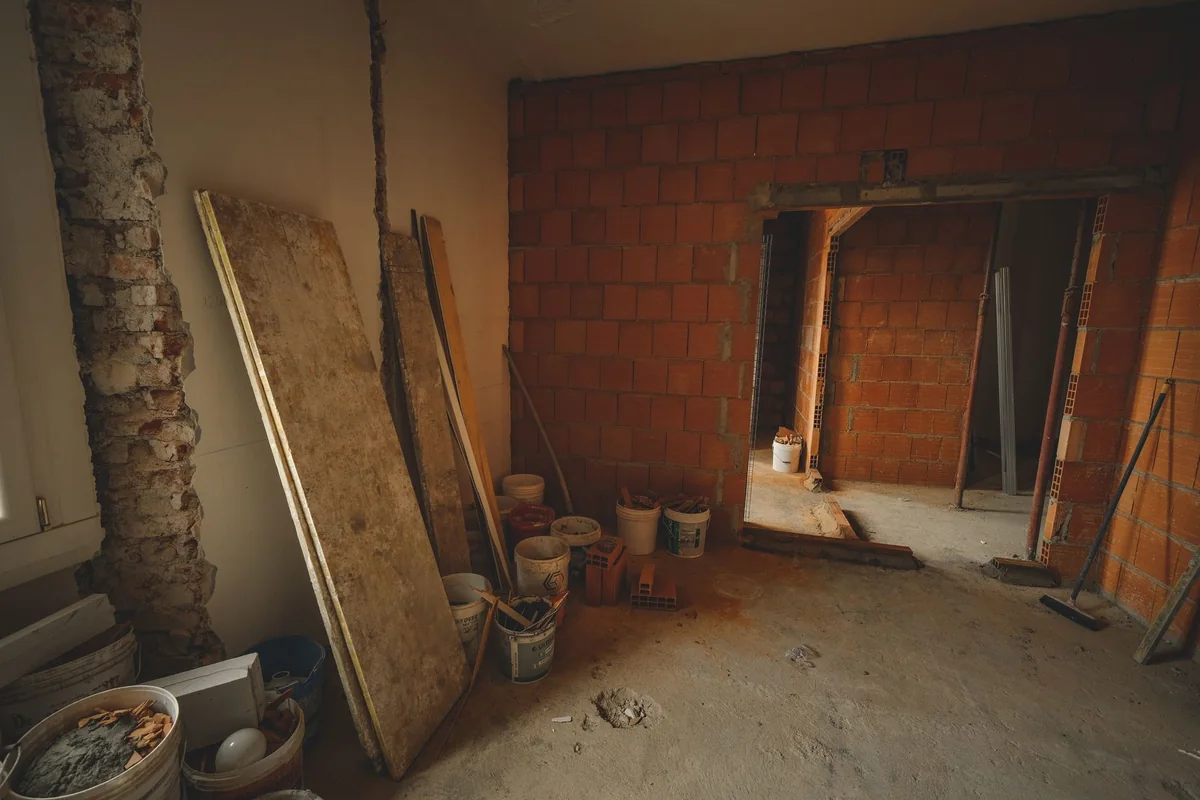
Once you have the fixed-up ceiling, the next step is subtracting what it costs to actually get the house there. This is the repair budget, and it is the line that swings the offer the most, because it is the one that changes house to house.
A buyer walks the property and prices the work the way a contractor would, not the way a nervous seller fears it. Roof, furnace, water heater, electrical panel, plumbing, foundation, windows, then the cosmetic layer: kitchen, baths, flooring, paint, the stuff buyers actually see. Each gets a real number, not a scary round guess. The full sum, plus a cushion for the surprises that always hide behind old drywall, is the repair line.
This is why two houses on the same street get very different offers. A house that needs paint and carpet has a small repair line and an offer close to ARV. A house that needs a roof, a furnace, and a gutted kitchen has a large repair line and an offer well below it. The offer did not get meaner. The worksheet just did more subtracting. If your house is genuinely rough, it is worth understanding how much you actually lose selling as-is, because the honest number is usually smaller than the fear.
(My very first deal, at about twenty, was the worst house on its block, right next to Ames High School. Before I could price a single repair I spent a day picking up hundreds of needles out of the yard. That house needed everything. A nice couple lives there now and their kids go to Ames High. The repair line on that one was enormous, and it had to be, because the work was real.)
Here is the useful part for you: because the repair budget is the biggest lever, it is also the most negotiable in an honest way. If a buyer's repair estimate feels high, ask to see it broken out. A fair buyer will show you the pieces. Padding the repair line to quietly shrink the offer is one of the oldest tricks in the book, which is a good reason to compare more than one, and to read up on how a cash offer really stacks up against listing with a realtor before you decide.

The costs in the middle: holding, closing, and reselling
This is the line nobody thinks about, and it is real money. A cash buyer does not just buy your house, fix it, and teleport it to a new owner. They own it for months while the work gets done and it sells again, and owning a house is not free.
Holding costs are the meter running the whole time: property taxes, insurance, utilities to keep the lights and heat on, loan interest if the buyer borrowed to fund the purchase and rehab, and general upkeep so the place does not slide backward. Iowa winters alone make the utility line nothing to wave off. A few months of carrying a house adds up faster than people expect.
Then there are closing costs, and here is the part that surprises sellers: a cash buyer pays them twice. Once to buy your house, and again to sell it after the work is done. Title, escrow, transfer, attorney and abstract work, and on the resale, the agent commission to list it. If you have never had to eyeball what closing costs actually include, the Consumer Financial Protection Bureau's breakdown of closing costs is a clean, unbiased place to start, and Zillow has a similar look at the costs of selling a home.
There is one cost that is specific to selling here, and it trips up out-of-state buyers all the time. Iowa is an abstract state. Instead of title insurance, we use a physical abstract of title that gets updated and examined by an attorney before closing. It protects everybody, but it takes a few extra days, and that time is part of the carry too. It is one more reason a local buyer who has closed on plenty of Iowa houses can price your deal more tightly than a national outfit guessing from a spreadsheet in another state.
| The worksheet | What it is | Which way it moves the offer |
|---|---|---|
| After-repair value | What the house sells for fully fixed up, from comparable sales | Sets the ceiling. Everything else subtracts from here. |
| Repair budget | Contractor cost to bring the house to that fixed-up value | The biggest swing. Rougher house, bigger subtraction. |
| Holding and closing costs | Taxes, insurance, utilities, interest, and closing on both ends | Steady bite in the middle. Longer timelines cost more. |
| Margin | The buyer's return for the risk, capital, and work | Kept reasonable by a buyer who wants the deal to close. |

The margin, and why a fair offer is not a lowball
The last number is the one sellers assume is the villain: the margin. That is the buyer's return for putting up the cash, taking on the risk, and doing the work. And here is the honest part I will not dodge. Yes, a buyer builds in a margin. If they did not, they would go broke and stop buying houses, and then you would have one fewer option when you needed one.
But a fair margin is not the same thing as a greedy one, and the difference is the whole ballgame. A fair buyer keeps the margin reasonable because they want the deal to actually close. Price it too fat and the offer is insulting, you walk, and everyone wasted a Saturday. A lowballer does the opposite: they inflate the repair line, pad the costs, and load the margin, betting you are too stressed to check the math. Same four-line formula, completely different intentions.
So how do you tell them apart? You ask to see the pieces. Ask what ARV they used and what comps it came from. Ask for the repair estimate, broken out. A fair buyer answers without flinching, because their number is a worksheet they are happy to show. A lowballer gets vague, because their number is a hope they do not want you inspecting.
There is a bigger point buried in that margin that rarely gets said out loud. Buying a rough house, fixing it, and selling it is not stripping value out of a neighborhood. It is putting hundreds of thousands of dollars back into a street. The house that was dragging the block down gets a new roof, new mechanicals, and a family that stays. I think of it as the six S's: school, security, street, sanitation, spaces, and services all get better for the next people who live there. The margin is what makes that work possible on the worst houses, the ones a realtor will not even list.
A lowball is a number set low on purpose. A fair cash offer is a number set honestly and shown to you on request. They can read the same on paper. Only one of them survives a follow-up question.
Most sellers I meet are not scared of selling. They are scared of what they do not know, the part of the process nobody explained. So I explain it: the after-repair value, the repair budget, the costs, the margin, and the Iowa abstract that adds a few days at the end. Once you can see all four numbers, a cash offer stops being a mystery and starts being a decision. And if a cash sale is not your smartest move, I will tell you that from the get-go. No harm, no foul. I am just one more option to weigh. You can see exactly how the process works, and where I buy across Iowa, before you ever share an address.
The bottom line
How do cash home buyers calculate their offer? They start with the after-repair value, subtract a real repair budget, subtract the holding and closing costs of owning and reselling the house, and subtract a fair margin. ARV minus repairs minus costs minus margin. It is arithmetic, not a shakedown, and any buyer worth your time can walk you down the worksheet line by line. When the offer lands below your zestimate, that is not the buyer being cheap. That is the price of selling as-is, today, with no repairs, no showings, no fees, and a close in as few as 7 days.
If you want the honest math on your specific house, tell me about it and I will put together a fair, no-obligation cash offer, and if you would rather understand the trade first, here is what selling as-is in Iowa actually means. I have spent six years in Iowa real estate and bought well over 100 homes across the state, with no commissions and no fees, and if listing is the better move for you, I will say so.
How cash offers are calculated: FAQ
How do cash home buyers calculate their offer?
A cash buyer starts with the after-repair value (ARV), the price your house would sell for fully fixed up, then subtracts three things: the repair budget to get it there, the holding and closing costs of buying and reselling it, and a fair margin for the risk and the work. ARV minus repairs minus costs minus margin. The number you see is what is left after all four come off the top. It is arithmetic, not a gut feeling, which is why a serious buyer can walk you line by line through how the offer was built.
How is a cash offer calculated on a house that needs a lot of work?
The same formula, but the repair line does the heavy lifting. On a rough house, the cost to bring it back to full market value is large, so more comes off the after-repair value and the offer lands further below retail. That is not a penalty, it is the buyer pricing in work you would otherwise have to pay for, wait through, and supervise. The rougher the house, the wider the gap, which is exactly why a cash sale tends to make the most sense on the homes that need the most, not the least.
Why is a cash offer lower than my home's market value?
Market value assumes a fixed-up house sold the slow way: repairs done, buyer financed, showings held, agent commissions paid, and a close weeks or months out. A cash offer buys the house as-is, today, with none of that. The buyer takes on the repairs, the carrying costs, and the risk that the resale does not go to plan, and prices those in. You trade some top-line dollars for speed, certainty, no repairs, no fees, and a close in as few as 7 days. Whether that trade is worth it depends on your house and your situation.
Is a cash offer just a lowball offer?
Not if the math is honest. A lowball is a number pulled low on purpose, hoping you are desperate enough to take it. A fair cash offer is a worksheet: after-repair value minus a real repair budget minus real costs minus a reasonable margin. They can look similar from the outside and be nothing alike underneath. The test is simple. Ask the buyer to show you the pieces. A fair buyer will walk you through the after-repair value, the repair estimate, and the costs without flinching. A lowballer will not.
Can I get a cash offer in Iowa with no fees or commissions?
Yes. A direct cash buyer is not an agent, so there is no commission and no listing fee, and a fair buyer covers the standard closing costs too. What you are quoted is what you walk away with, minus any mortgage payoff or liens on the property. In Iowa there is one local wrinkle: the state uses a physical abstract of title that an attorney examines before closing, which can add a few days but protects you. No fees does not mean no offer worth reading. It means the price you see is not getting quietly whittled down at the closing table.